Lyceum Theatre, London
Official website: https://www.thelyceumtheatre.com/
First Lyceum Theatre, just off the Strand, dates from 1772.
Demolished in 1815 to make way for a newly designed theatre.
Second Lyceum Theatre (?1815 - 1830) Designed by Samuel Beazley.
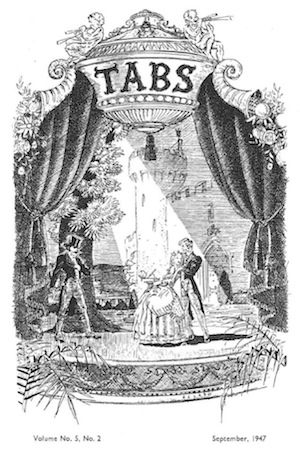
The first theatre in London to be lit by gas, on stage on 6th August 1817 and in the auditorium on 8th September 1817 [ref Tabs Vol 5 Issue 2, 1947]
- 1828 - English premiere of Mozart's Cosi Fan Tutte
- 1830 - Theatre destroyed by fire, with no casualties
Current Lyceum Theatre Dates: July 1834 - present
Capacity: 2,100 across three levels
Designed again by Samuel Beazley
Balcony level overhangs the circle, with no supporting pillars.
Owned by the Ambassador Theatre Group (ATG)
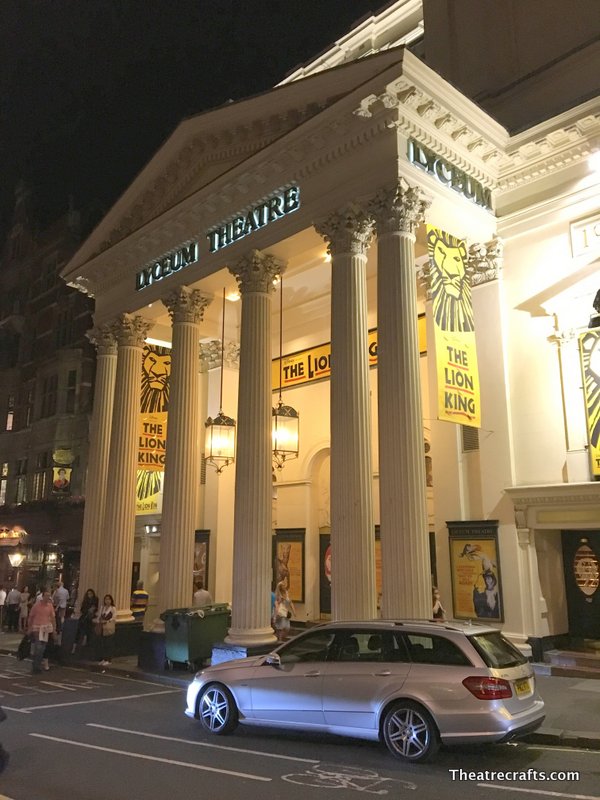
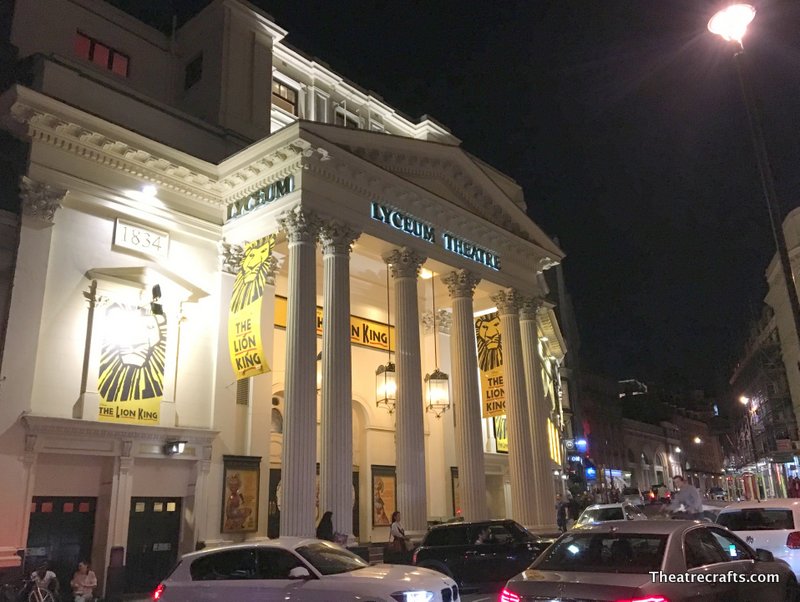
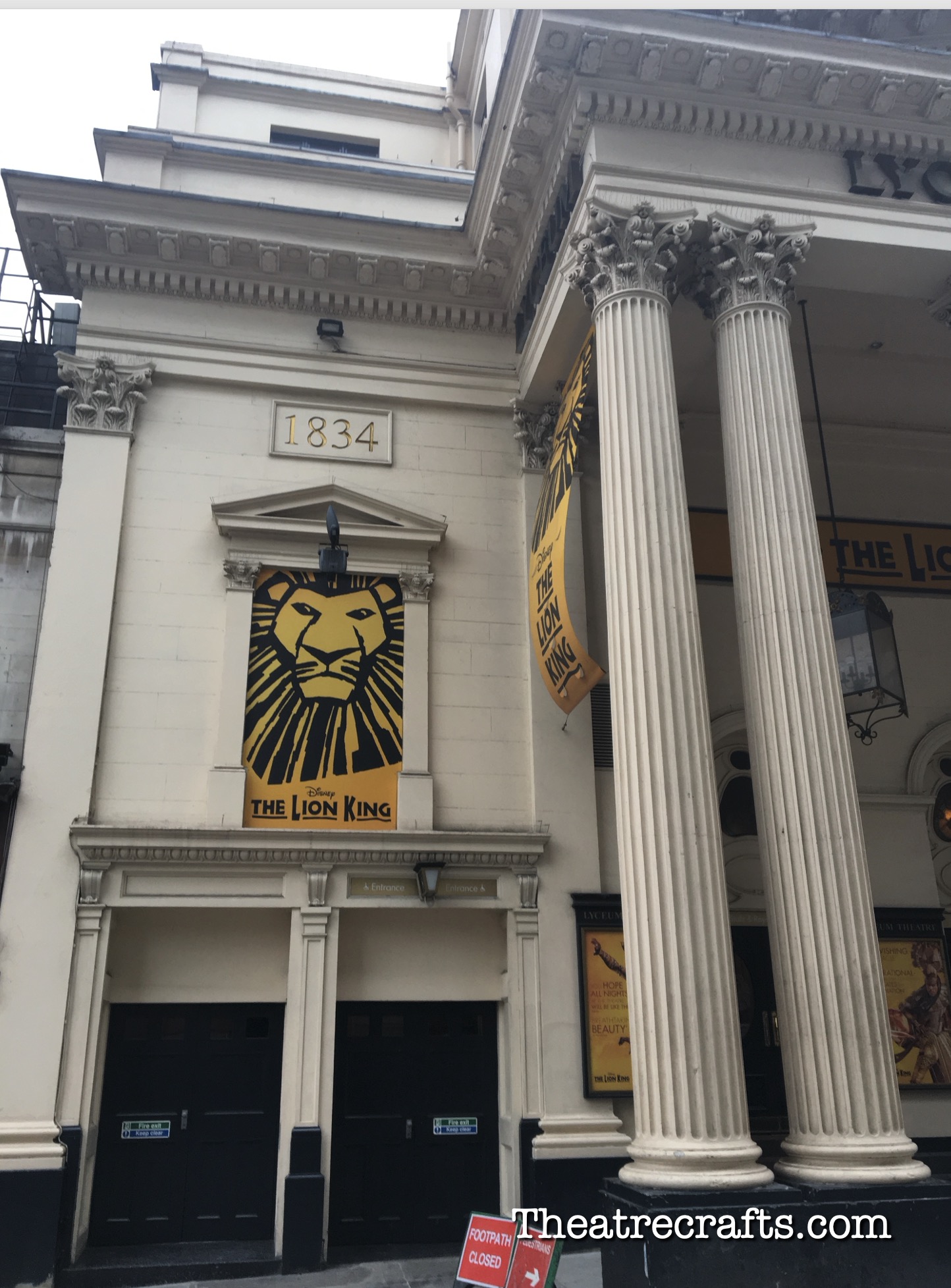
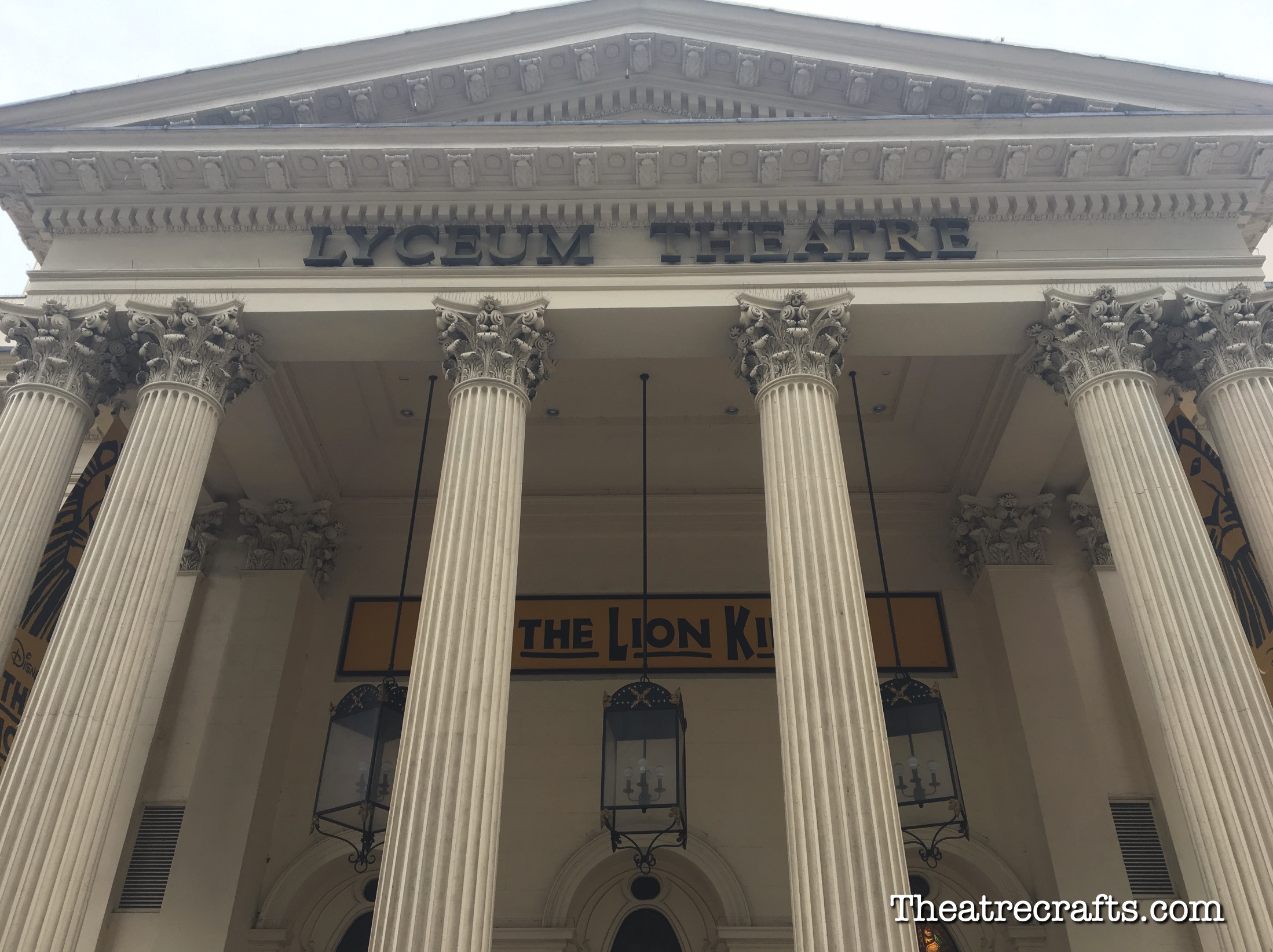
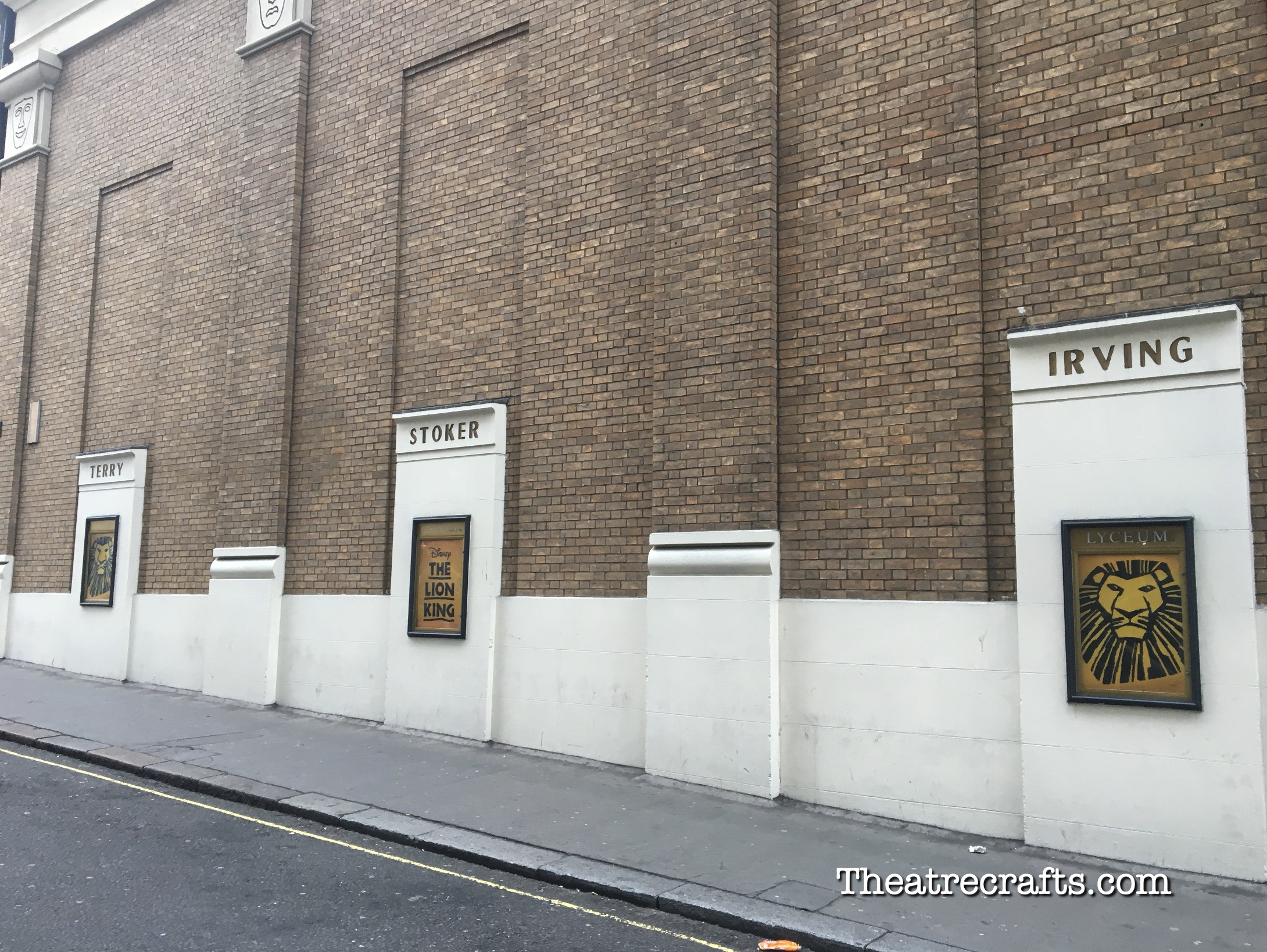
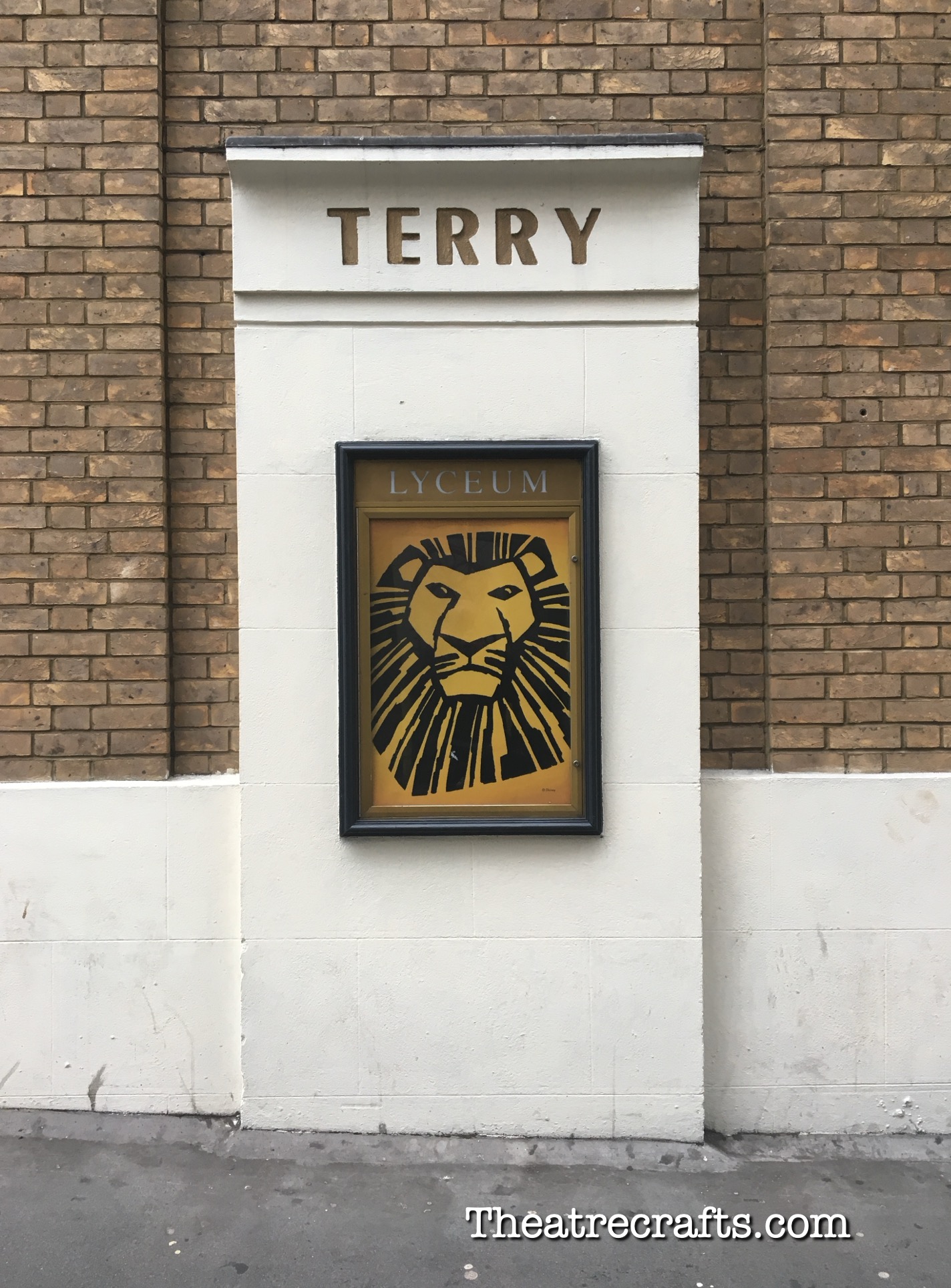
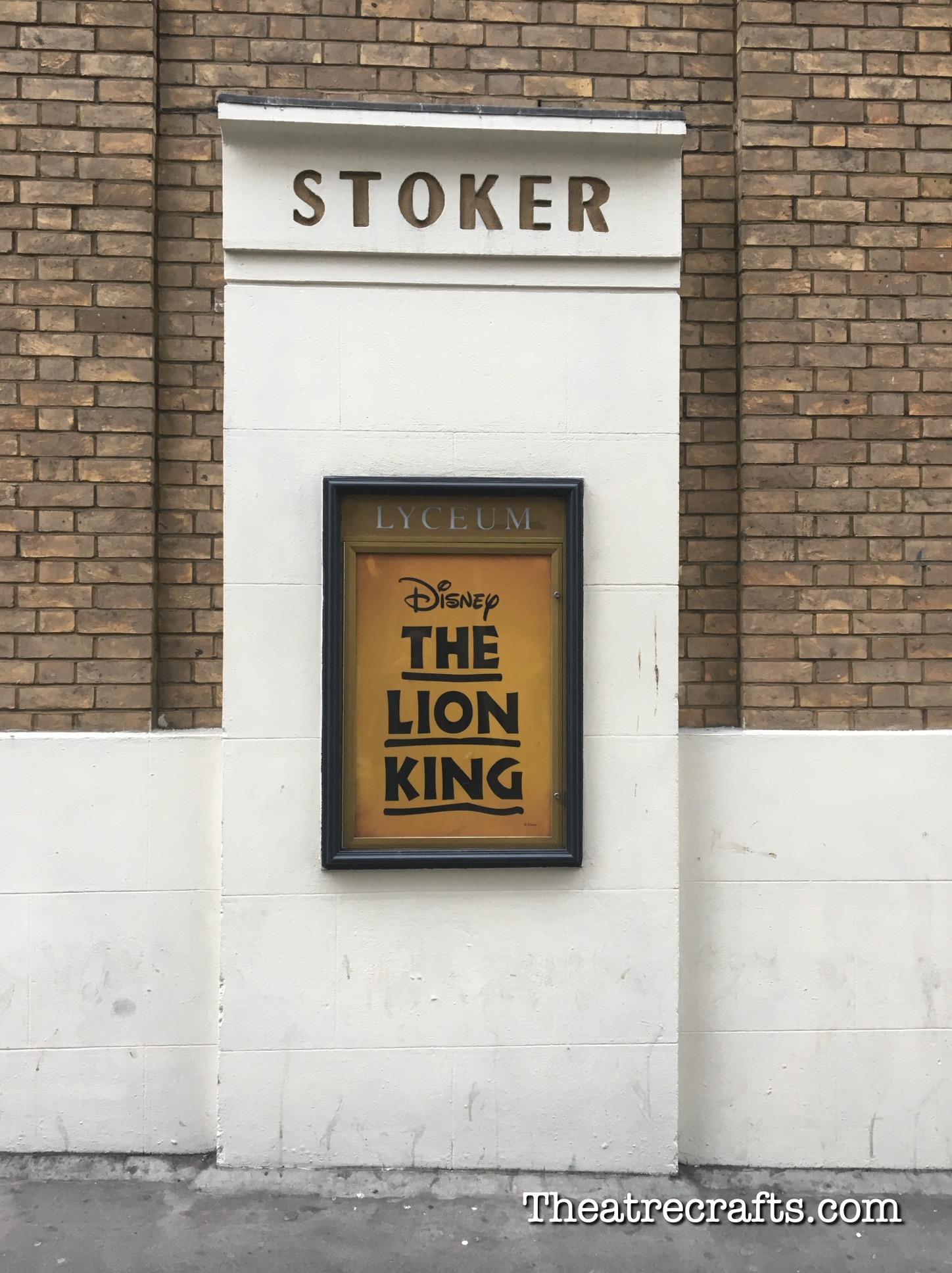
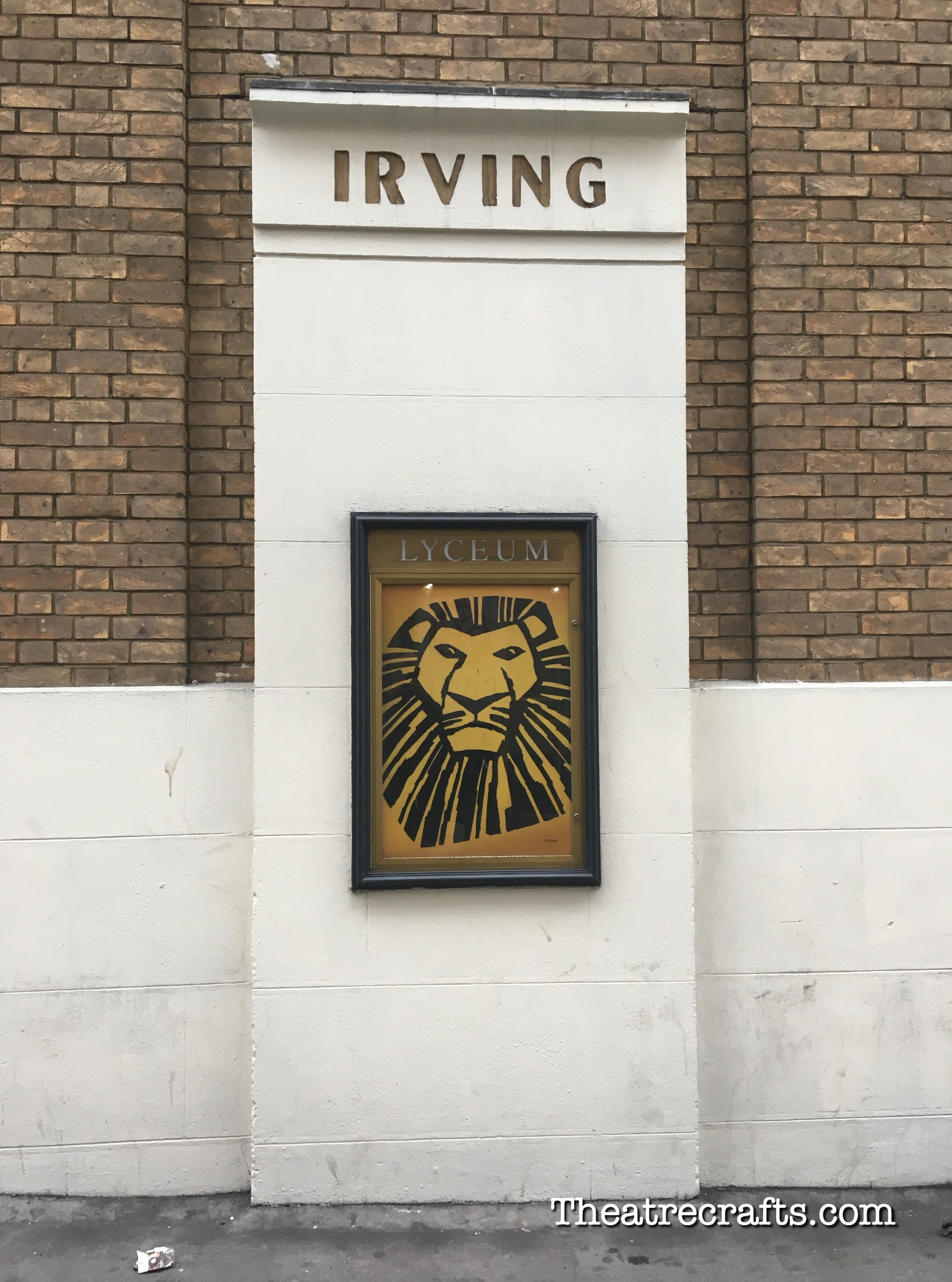
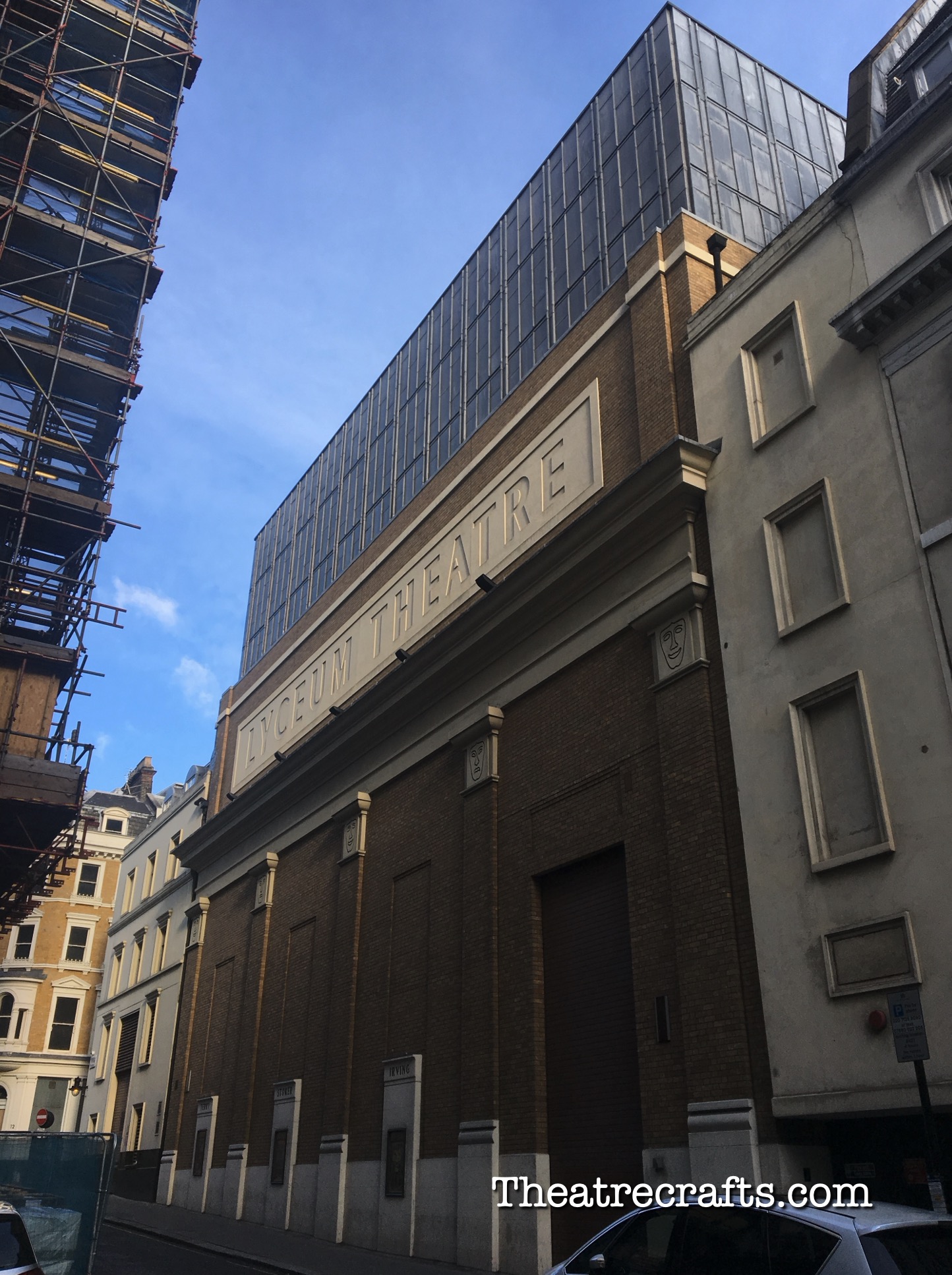
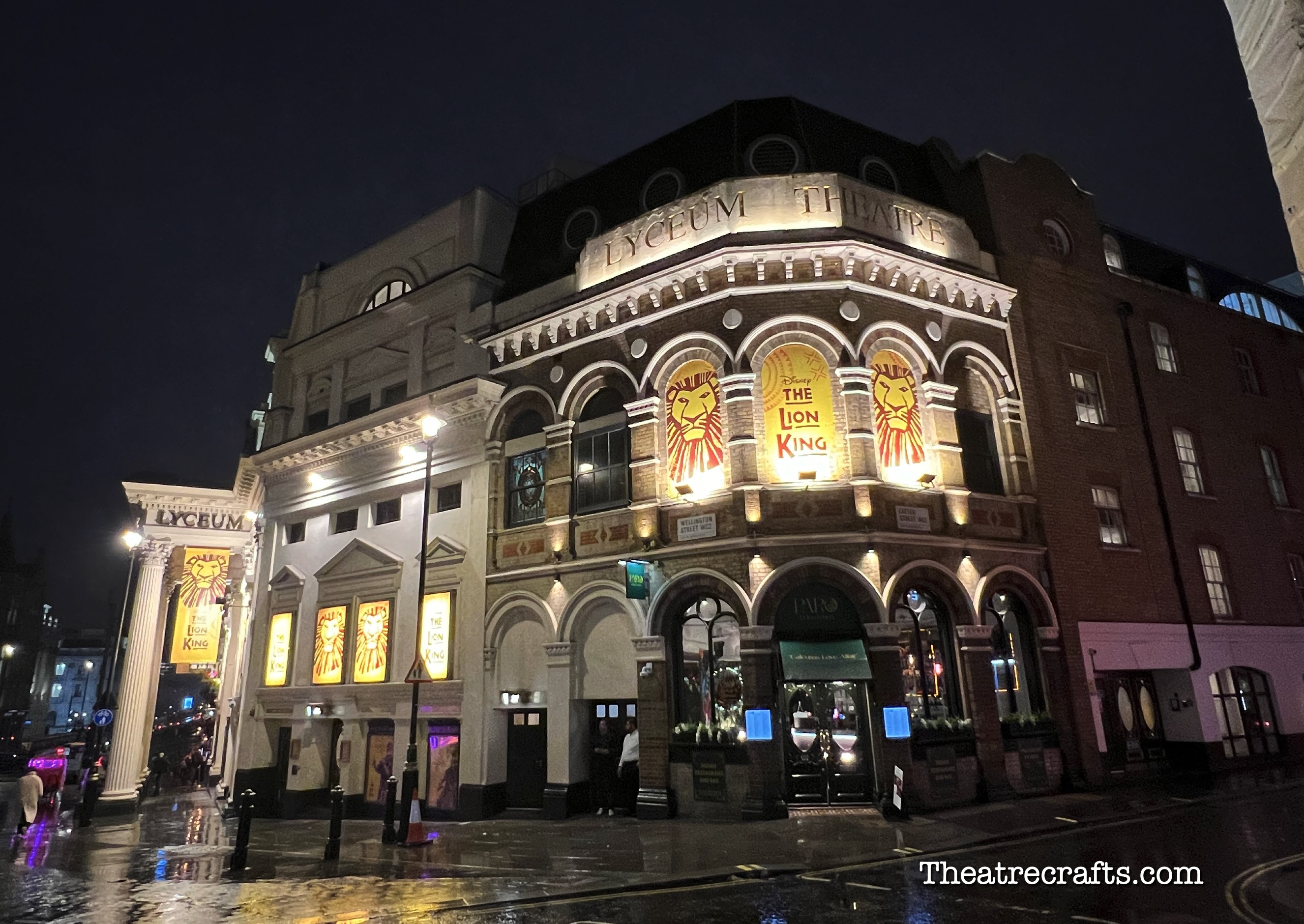
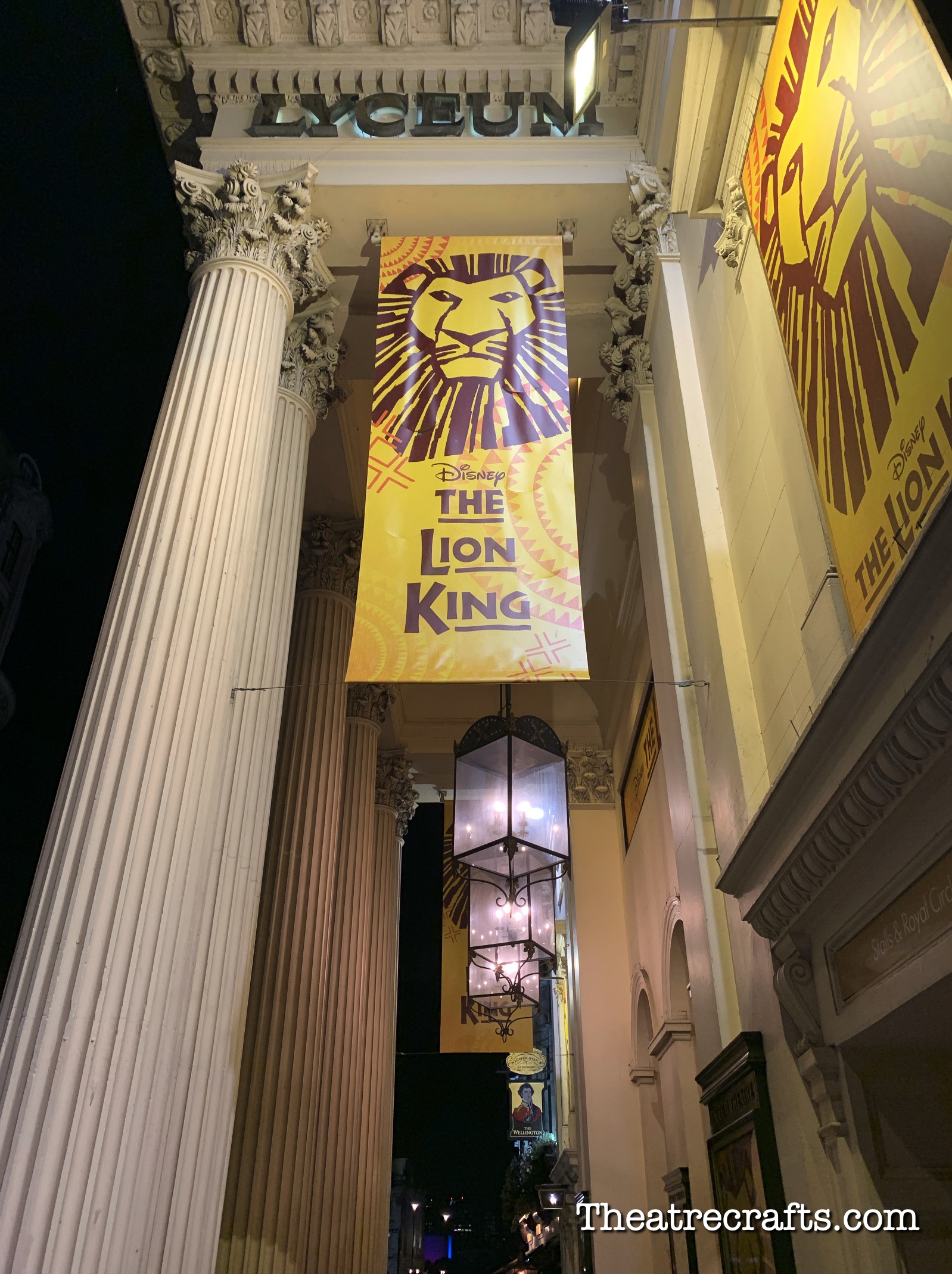
The home of Disney's The Lion King since 1999.
1970s Plan
The Lyceum was one of five theatres that were almost demolished due to a plan to redevelop the Covent Garden area by the Greater London Council (GLC), in 1971. The GLC planned to build new theatres to replace them. However, the plan was abandoned in 1973 after a campaign by the Covent Garden Community Association. Guardian article about the plan which contains fascinating insights into the financial workings of West End theatre in the 1970s.
Past Productions / History
- 29th July 2021: Performances of The Lion King resume
- 11th May 2020: The sub-stage area and orchestra pit was flooded to a depth of around 12 feet. London Fire Brigade were on site all night through to the following morning pumping it out. The damage is unknown. [London Fire Brigade]
- Like other theatres worldwide, the Lyceum paused performances in March 2020 due to the Coronavirus pandemic
- Julie Taymor’s acclaimed production of The Lion King began previews on 24th September 1999, and opened officially on 19 October 1999. It is the longest-running production in the Lyceum Theatre’s history.
- 1999: Oklahoma! (21st January 1999 - 26 June 1999) National Theatre production
- 1996: Jesus Christ Superstar (Previews from 9 November 1996, Opened 19 November 1996, closed 28 March 1998)
- The building was officially re-opened by HRH Prince Charles on 31st October 1996.
- September 1996: Construction period ends for Willmott Dixon and load-in of Jesus Christ Superstar begins.
-
1995-1996: The building was completely refurbished as a theatre once again, at a cost of £14.5 million. This included the construction of a new stage house and flytower and an enlarged orchestra pit.
Main contractor was Willmott Dixon (contract value £6.5million). Project Manager: Ron Malyon.
Architects; Holohan Architects.
Phase 1: Demolish fly tower, stage and dressing rooms and then extend these areas. New build consists of basement (6.5m below street level), a steel fly tower, dressing rooms, restaurants, bars and hospitality suites. The new area is housed in a concrete and brick shell on piled foundations.
Phase 2: Refurbish auditorium, with Willmott Dixon overseeing a team of artisan tradesmen who will restore the theatre.
Construction work began in May 1995 after archaeological investigations and enabling works.
Construction Diary:- Demolish backstage area and a side building.
- Excavate basement, temporarily supporting it using king posts with concrete infill panels and ground anchors which extended under the road.
- Install 46 bored piles, then cast the base slab, retaining walls and another floor slab below ground level.
- Install air conditioning and create new plant rooms in the spaces below the seats in balcony and circle.
-
New orchestra pit has a lift so the orchestra can be hidden or visible. Specialist flooring system can be removed.
September 1995: Work in the auditorium began. "Part of this work will include making moulds to patch up the ornamental plaster work: There are several cherubs with their heads knocked off theyve been there since 1904, says Mr Malyon. And when you get up there those cherubs are enormous." [ref]
New fly tower:- More than 1600 steel members weighing 210 tonnes. The myriad bolts holding it all together weigh 210 tonnes alone.
- As well as up to 58.5 tonnes of scenery on 73 rails (bars), the 31m high 25m wide tower will support a 5m x 7m plant room, cantilevered over the auditorium.
- Structural design by Thorbum Colquhoun of Dublin
- Steel fabrication by Hawk (manufacture & erection)
- The build involved shutting off roads around the site and bringing a 160 tonne crane in over two weekends.
- Topping Out ceremony took place in May 1996 (attended by Heritage secretary Virginia Bottomley, Sir Ian Dixon (chairman of Willmott Dixon), Apollo Leisure chief executive Paul Gregg.
- Reference: Construction News 16 July 1996
- 1995: Planning permission granted for an £8million scheme. A second scheme was developed to meet the demands of the Theatres Trust to improve the specification. Royal Opera House and English National Opera had input since the theatre could be used for large-scale opera and dance.
- 1994: Apollo Leisure acquires the sub-lease to the Lyceum.
- 1986-1996: The building was largely unused.
- 1985: National Theatre production of The Mysteries, transfer from the Cottesloe Theatre. The performance was promenade, as there were no permanent seats in the venue - it was in use as a ballroom
- 1951 - 1968: The Miss World beauty contest was staged at the Lyceum Ballroom each year.
- 1945: Bought by Mecca Dancing and converted into the Lyceum Ballroom, using Morrison Shelters to create a dance floor, managed by Jack Croxford from the Royal Opera House, carried out by Matthews and Sons.
- 1939: Building bought by London City Council, with plans to demolish it to make way for road improvements. These were abandoned after World War II. The venue was used as a ballroom and then as a concert venue. In the 60’s, 70’s, and early 80’s it hosted performances by bands such as The Clash, The Grateful Dead, U2, and Queen.
- 1939 - Hamlet, directed by Sir John Gielgud (Gielgud gave the farewell cry 'Long live the Lyceum' at the curtain call of the final performance).
- 1937: 25th August - 4th December - Wanted for Murder [ref]
- 1904: Major renovations, with a new rococo interior designed by Bertie Crew. It opened with music hall & vaudeville acts, but these proved unsuccessful, so it reverted to drama.
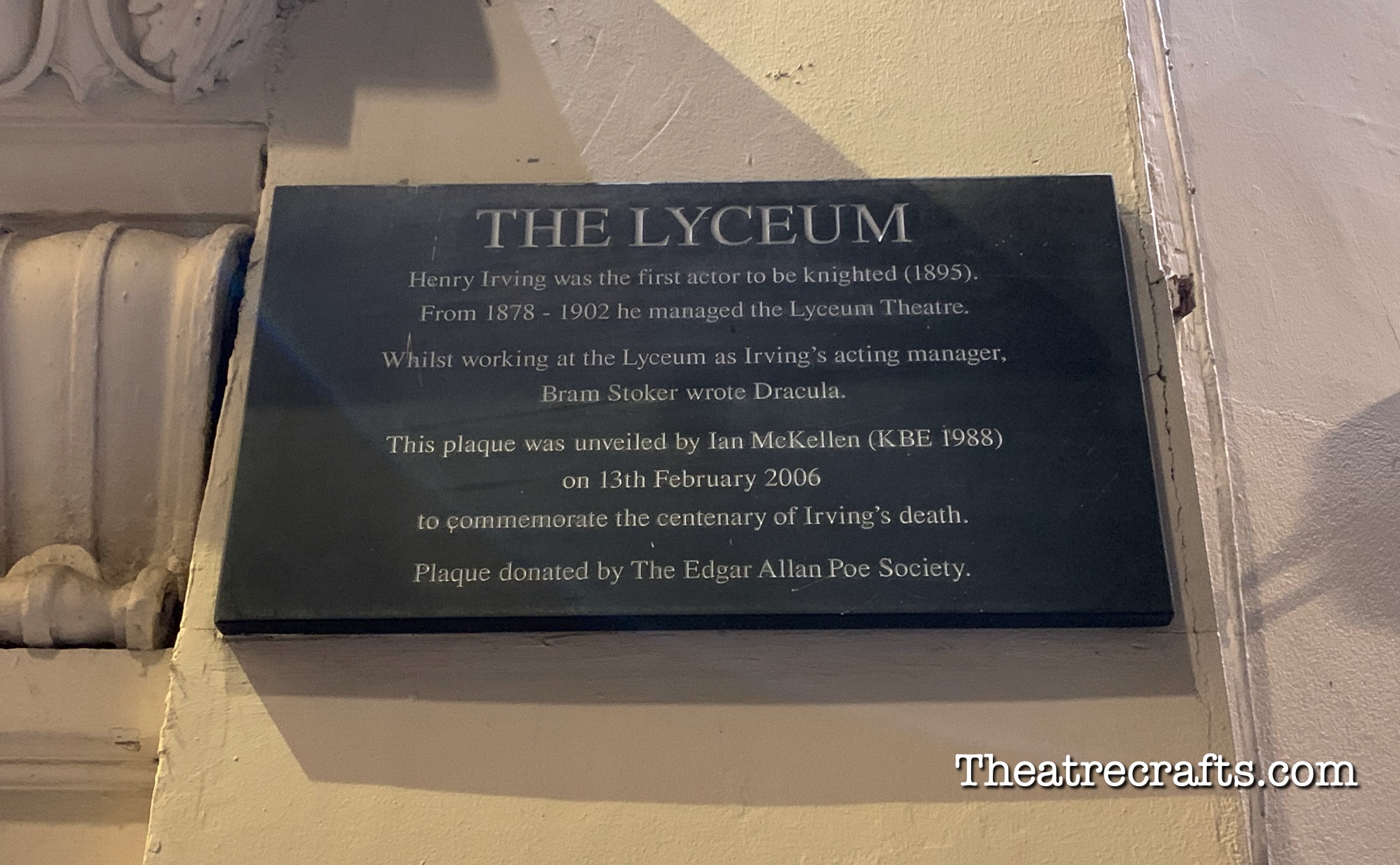
- 1878: Actor/Manager Henry Irving took over management of the theatre. Hired Ellen Terry to star opposite him in a variety of productions, including many great Shakespearean plays such as Hamlet, Macbeth, King Lear, The Merchant of Venice, Romeo and Juliet, and Much Ado About Nothing. The duo became two of the biggest stars in British theatre, and embarked on a number of American tours. Irving became the first British actor to receive a knighthood in 1895. Author Bram Stoker served as the business manager of the theatre for over twenty years, and he based the title character of his novel Dracula on Irving.
- The Mountain Sylph (1834) the first modern English opera to be staged.
- July 1834 - Theatre opens
The Theatres Trust
Lyceum Theatre, London on the Theatres Trust Database
Links to information about equipment at Lyceum Theatre, London over the years
- Dead Front Board (Strand)